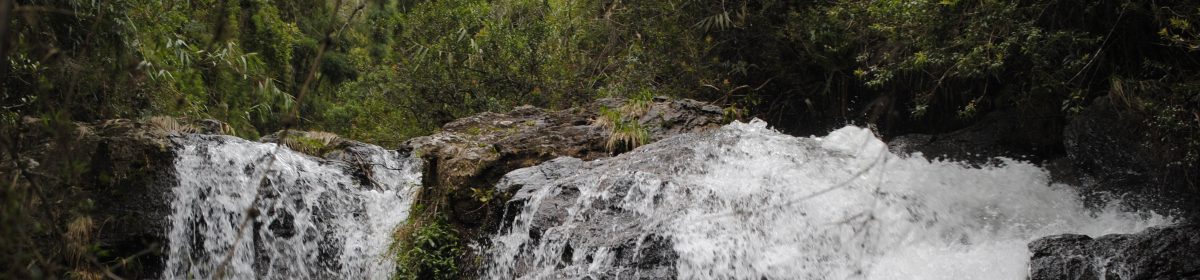
Couple fun projects have just been published from our lab. As always, pubs represent hard hard work, so I am especially thankful to all the authors who put in the time and effort. #ProudPI
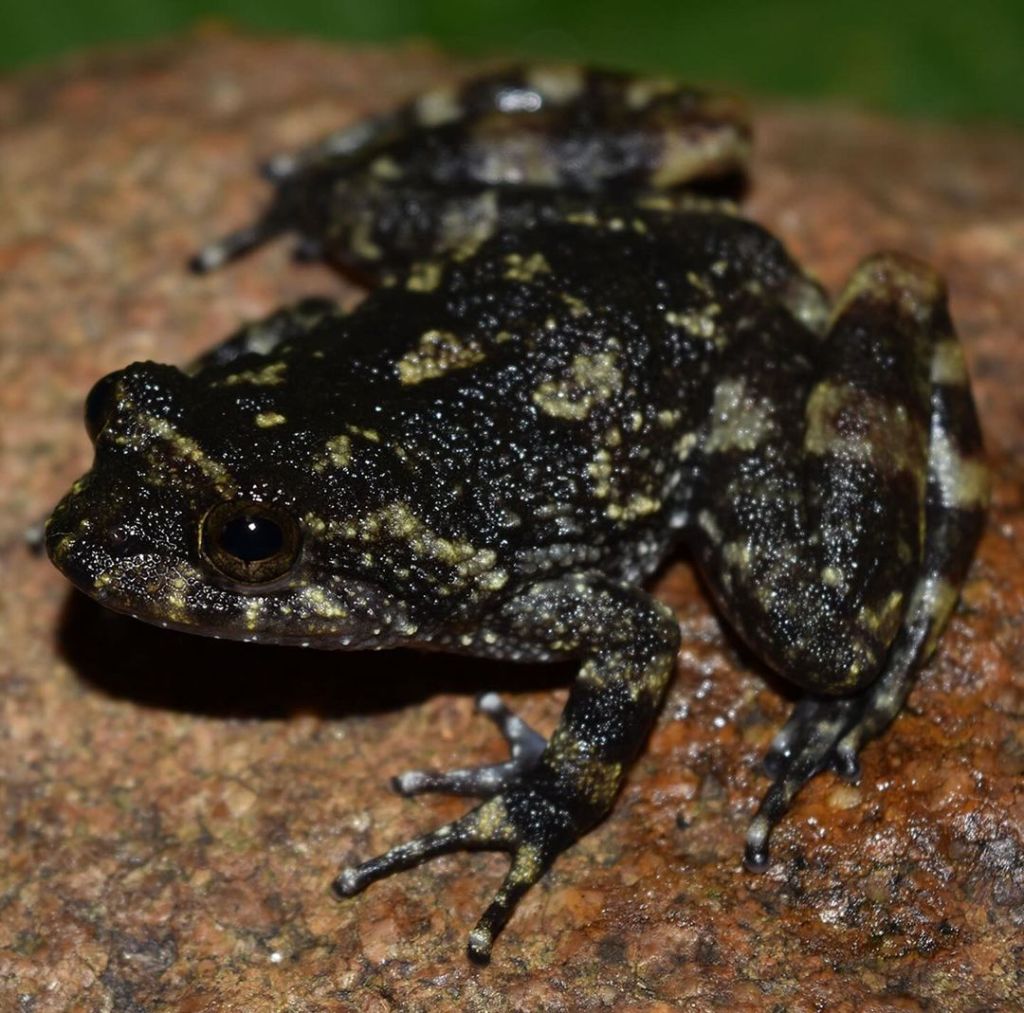
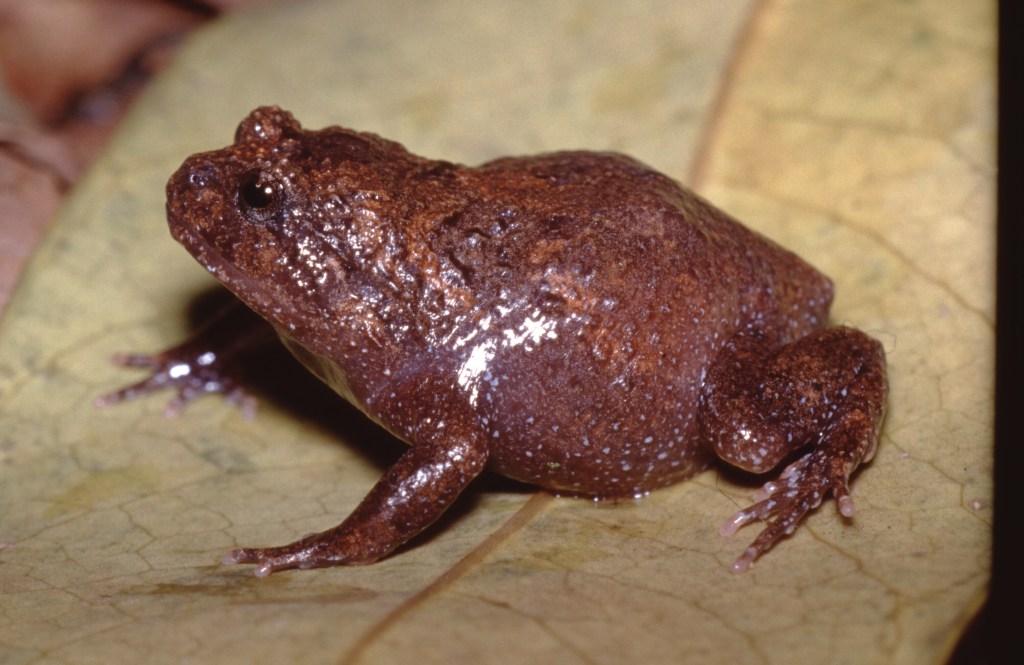
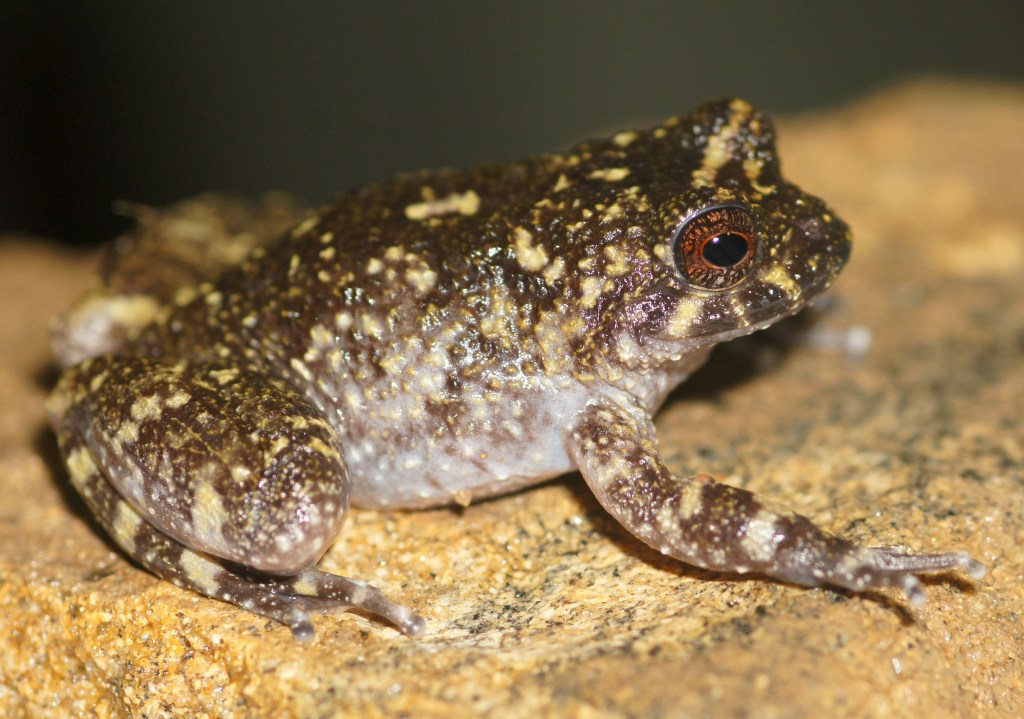
The first is a paper led by Fabio de Sá published in Ecology and Evolution (a paper from his PhD thesis). Two species of Cycloramphus come together in the Atlantic Coastal Forest of Brazil and there are some interesting dynamics going on in terms of introgression and mitonuclear discordance. [link]
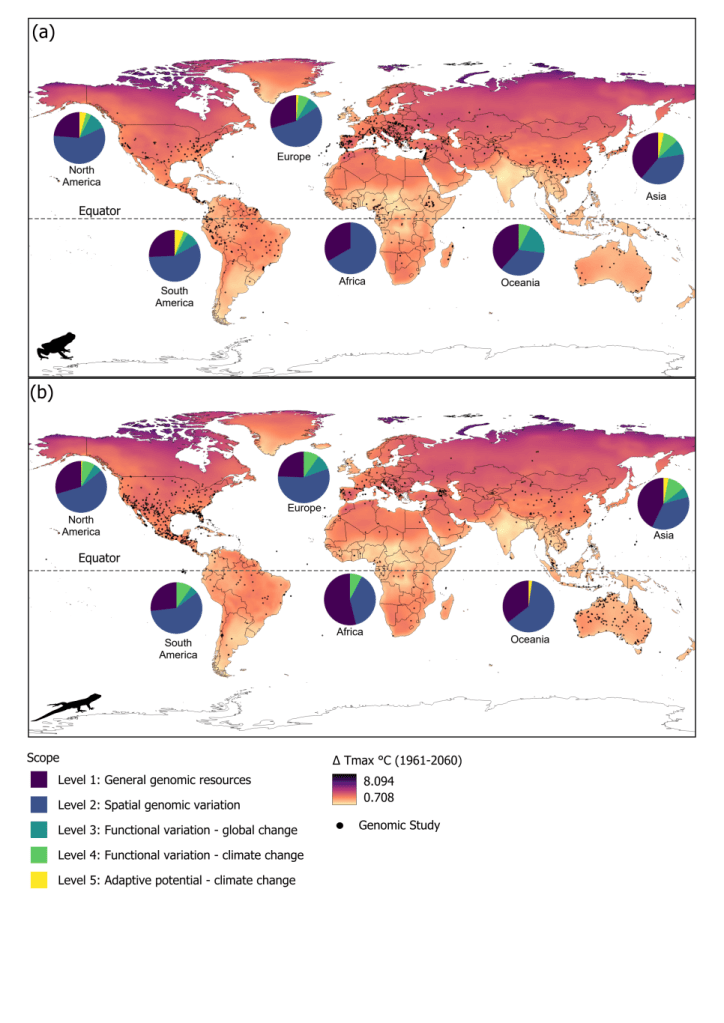
The second paper was a lab project, led by Céline Carneiro. We examine the global distribution of genomic resources for reptile and amphibian conservation. We find that i) resources exist, but are very skewed globally and areas of highest biodiversity are coldspots for genomic resources ii) most genomic resources provide information on spatial variation in population diversity, far fewer address functional variation and implications for species adaptive potential in the face of global change iii) Many of the coldspots show significant bias in authorship, with papers on taxa from the global south having fewer local authors compared to studies on taxa from the global north. A truly collaborative conservation genomics field will need improved resource sharing and capacity building in the Global South. [link]

 Zamudio Lab